The Damage Is Done, Why I Leave My Mistakes Alive
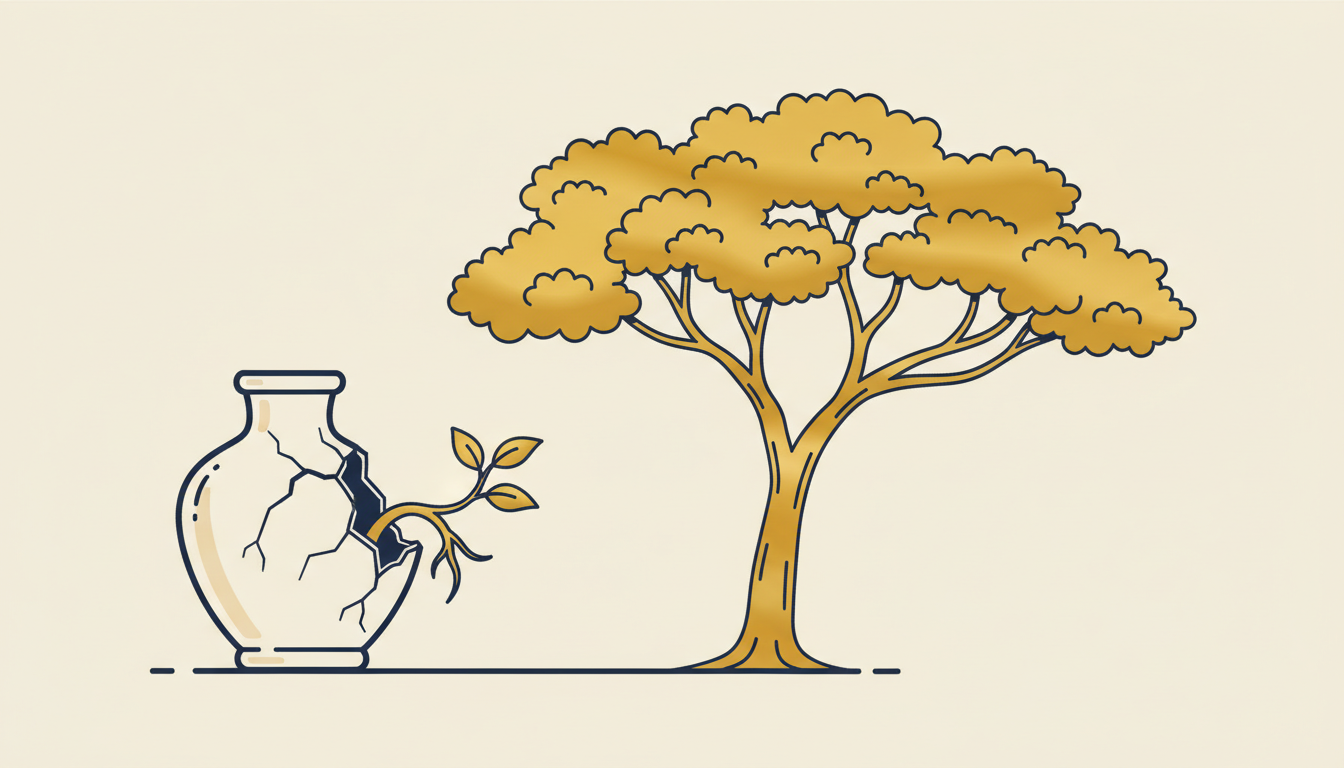
I have a reflex when I see code that doesn’t match what I had in mind: fix it. Immediately. The AI renames a class, picks a different design pattern, or structures a file in a way I wouldn’t have chosen. And boom, my fingers race to the prompt to set things “right.”
Except a few months ago, I stopped. The damage is done. And it’s become my most effective learning method.
The mistake that wasn’t
I work with AI agents every day. They generate code, refactor, build features. And regularly, they make choices different from mine. Not bugs. Choices. A naming convention I don’t use. A pattern I wouldn’t have picked. A slightly different folder structure.
My natural reflex: fix it. Restore my standard. Reestablish order.
But one day, I paused. I looked at the code and asked myself: what if the AI was right? Or more subtle: what if its choice, even “wrong” by my criteria, opened a door I’d never considered?
The code works. Tests pass. The user sees nothing. What exactly am I fixing?
The next-Pass rule
So I established a simple rule. The damage is done. Instead of fixing immediately, I live with it. Until the next time I come back to that code, to improve the feature, add something, fix a bug. That’s when I refactor.
And three things happen:
I understand. Coming back to the code with fresh eyes, I realize the AI’s choice had a logic I hadn’t grasped. It was a different school of thought, not a mistake. I would’ve spent 30 minutes “fixing” something that didn’t need fixing.
I get inspired. The pattern or naming convention leads me to discover an approach I didn’t know. The mistake becomes a free lesson.
Or, and this is my favorite outcome: the thing disappears on its own. I come back to the feature, I modify it, and the “weird” code I would’ve spent 30 minutes fixing is just gone. I rebuilt the feature, the AI’s choice got replaced naturally. I fixed it without fixing it. Zero minutes wasted.
The ratio? A good chunk fixes itself on the next pass. The rest taught me something. And if something still bothers me when I come back, I refactor then. It takes the same time as before, except now it’s at an opportunistic moment, not in panic mode.
The hidden cost of perfectionism
But there’s an even stronger argument than learning. Opportunity cost.
When I spend 1 hour “fixing” a working choice, renaming classes, restructuring folders, aligning a pattern, that hour is gone. The code already worked. The user sees zero difference. I traded 60 minutes of progress for aesthetic comfort.
Every minute spent fixing “damage” that isn’t damage is a minute stolen from something that actually moves the needle. The damage is done? Good. I’m moving on.
Perfectionism is the luxury of those without deadlines. And as indie devs, we all have them.
What Islam taught me about mistakes
This mindset didn’t come from nowhere. In Islam, there’s this principle: hardships and mistakes aren’t just punishments. They’re growth mechanisms.
The Quran says:
“Perhaps you hate a thing and it is good for you. And perhaps you love a thing and it is bad for you. Allah knows, and you do not know.” (Quran 2:216)
This isn’t a punishment to endure. It’s a mechanism: the thing you instinctively reject carries something you can’t see yet. Your immediate aversion isn’t reliable judgment.
When the AI makes a choice that bothers me, my aversion is instinctive. But I don’t know what that choice might teach me if I give it time to breathe. Leaving the mistake alive until the next pass is exactly that: accepting that my immediate judgment is incomplete.
The entrepreneurship parallel
This principle applies far beyond code.
How many founders spend weeks polishing a product before launching? The landing page isn’t pretty enough. The copy isn’t perfect. The onboarding is missing an animation. So they wait. And meanwhile, the market moves on.
Shipping imperfect is the same philosophy. The damage is done, version 1.0 has flaws. But it’s in users’ hands. And users, unlike your inner perfectionist, tell you what actually matters.
| The Perfectionist | The Damage Is Done | |
|---|---|---|
| Reaction | Fix immediately | Observe until the next pass |
| Time invested | 30-60 min per “mistake” | 0 min (or opportunistic refactor) |
| Learning | Confirms what you already know | Discovers what you didn’t |
| Progress | Stuck on details | Moving on to what matters |
| Result | ”Clean” code | Broader perspective + time saved |
In entrepreneurship as in code, deliberate imperfection is a tool. Not negligence, strategy. You pick your battles. And the ones you ignore teach you more than the ones you win.
When to actually fix things
Obviously, this rule has limits. I apply it to small changes: an unusual naming style, an alternative design pattern, a different file structure, a creative variable name.
I don’t apply it to bugs impacting users, security vulnerabilities, major architectural decisions, anything that breaks tests.
The “damage” I’m willing to live with is cosmetic or philosophical. Not structural. If the foundation is cracking, you don’t stare at the crack until the next pass. You repair it immediately.
What i get out of it, every time
Every time I’ve let the “damage” live, I’ve gained something. A new pattern discovered. A convention questioned. An angle I’d never have explored in control-freak mode.
AI isn’t just an executor. It’s also a perspective generator. Its “mistakes” are disguised suggestions. And if you fix them right away, you close the door before you even know what was behind it.
The damage is done. Move forward.
And if it still bothers you on the next pass? You refactor then. Opportunistic, not compulsive.
If this mindset resonates, subscribe to the newsletter. I share weekly learnings from dev, AI, and entrepreneurship.